By Analogy
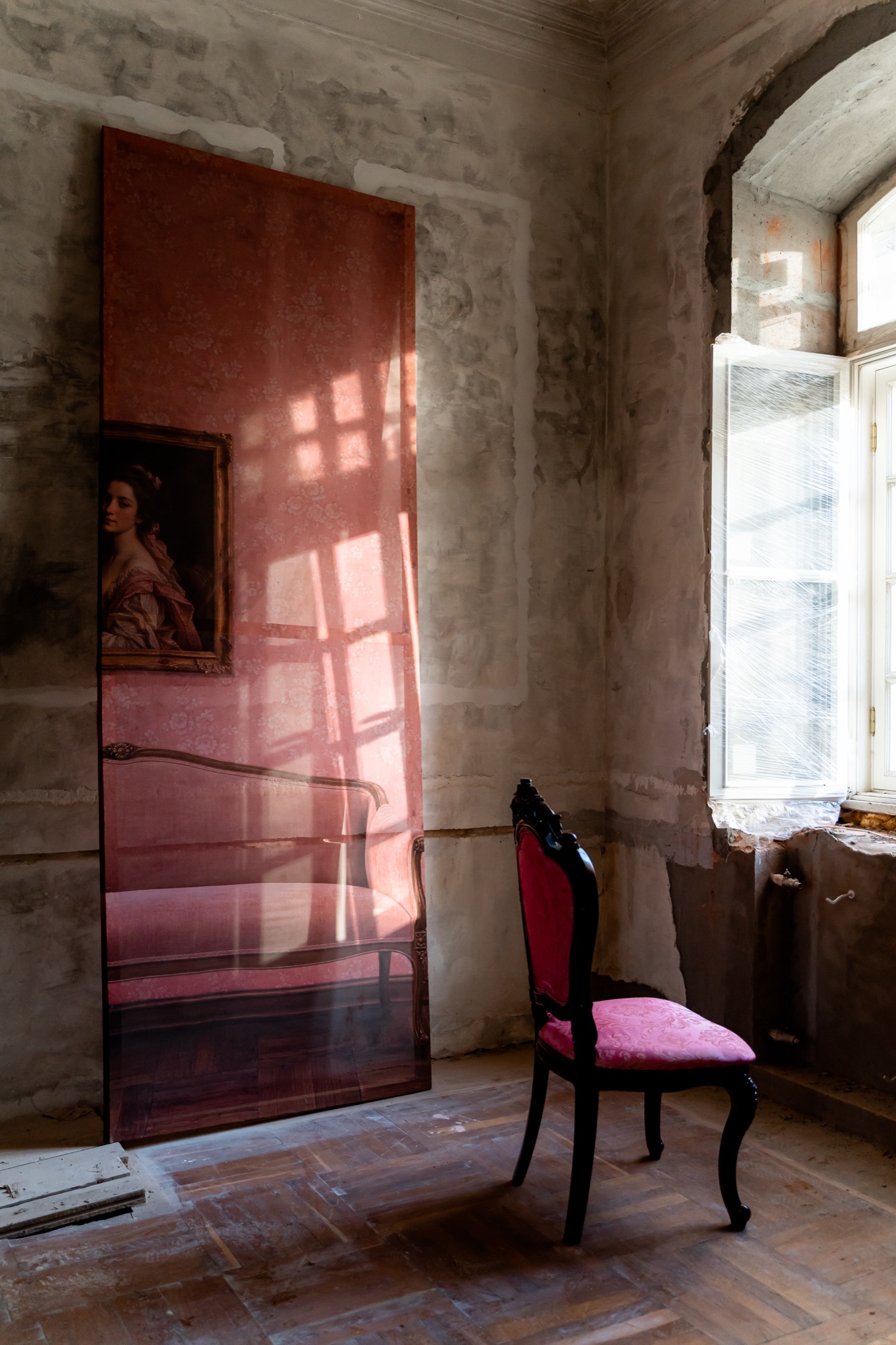
The restoration of a historical building inevitably entails an interpretation of the past. The choice of which periods and historical layers are to be preserved and reconstructed, and which are left outside them, reflects each era’s idea of what heritage is worth. By recreating some images of the past and excluding others, restoration shapes historical memory, determining how the building will appear to future generations.
After the fire of 1924 and the subsequent loss of a substantial part of the building, the manor house of the Yasenevo estate was recreated in the 1970s on the basis of historical analogues. In the course of a later restoration the façade acquired a pink colour, whose historical justification is questioned by the estate’s researcher M. Yu. Korobko.
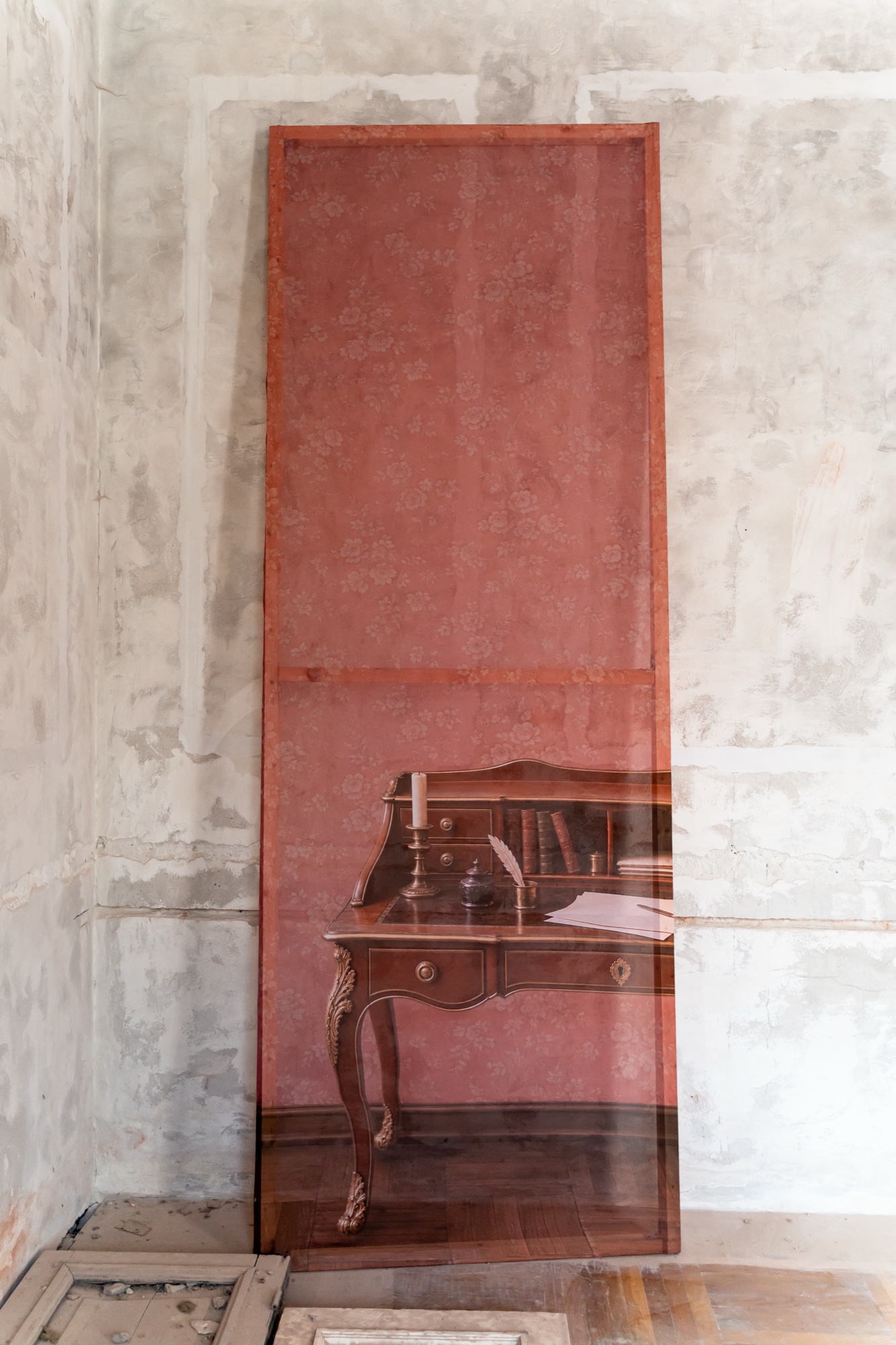
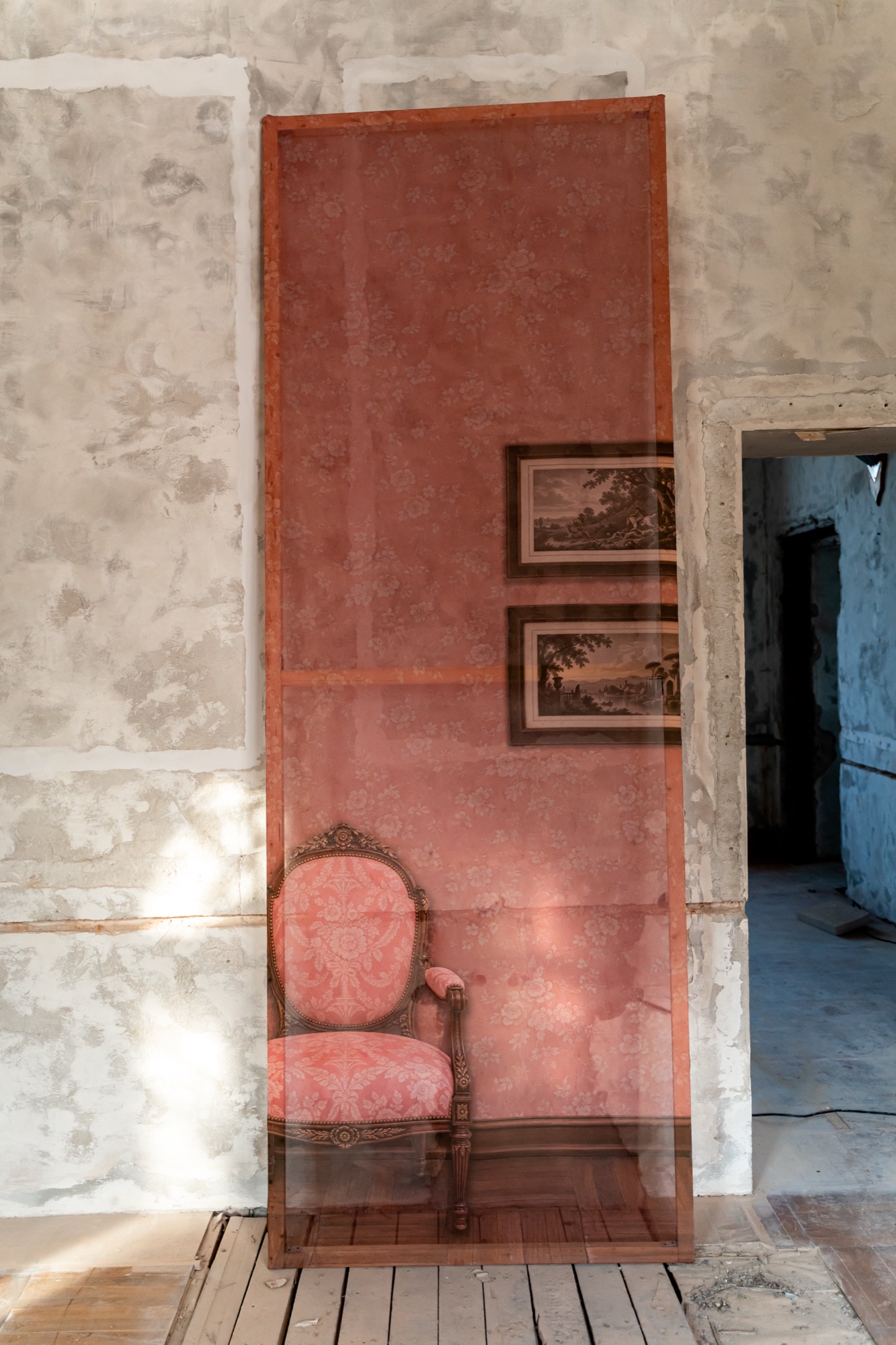
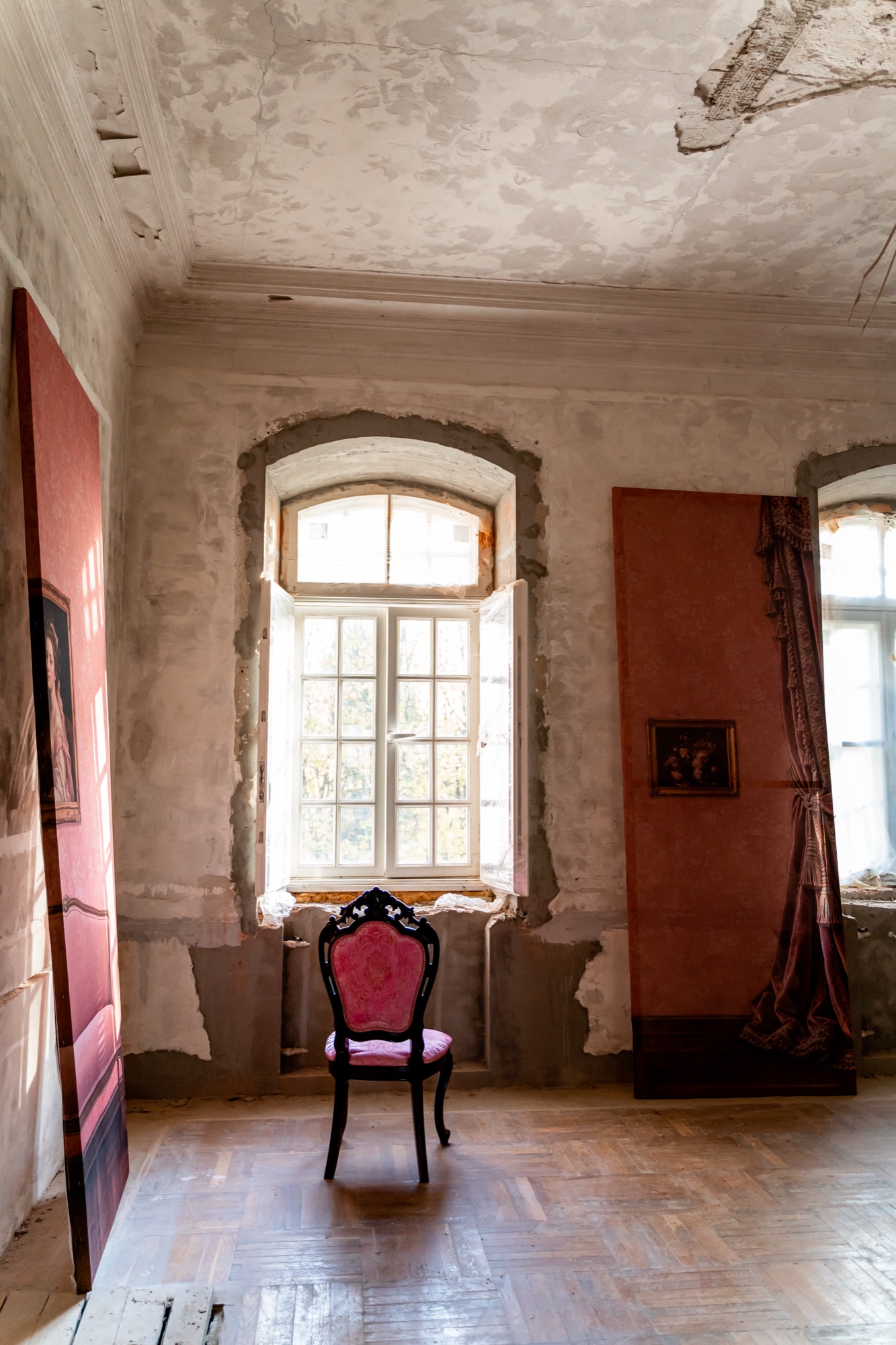
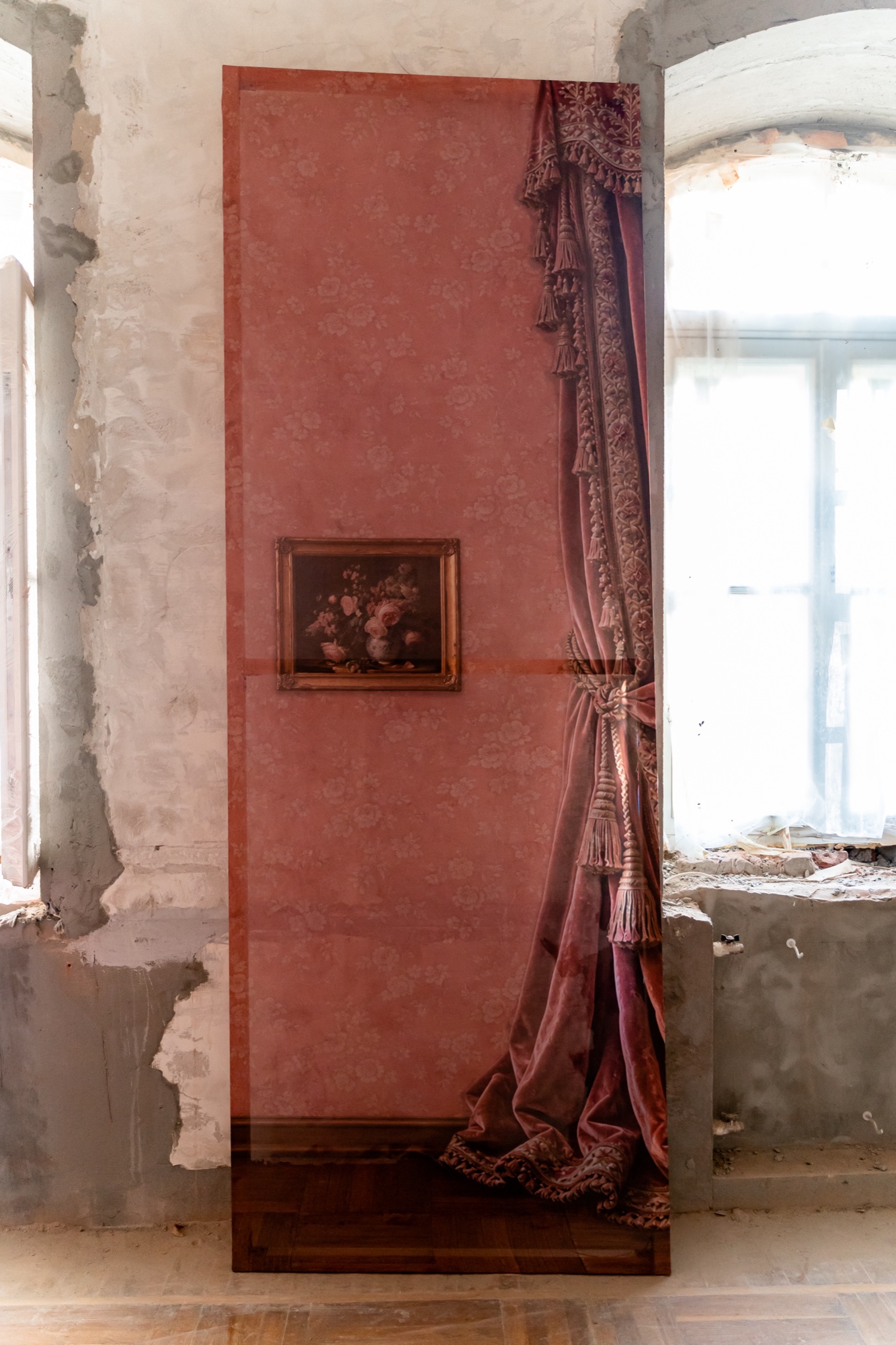
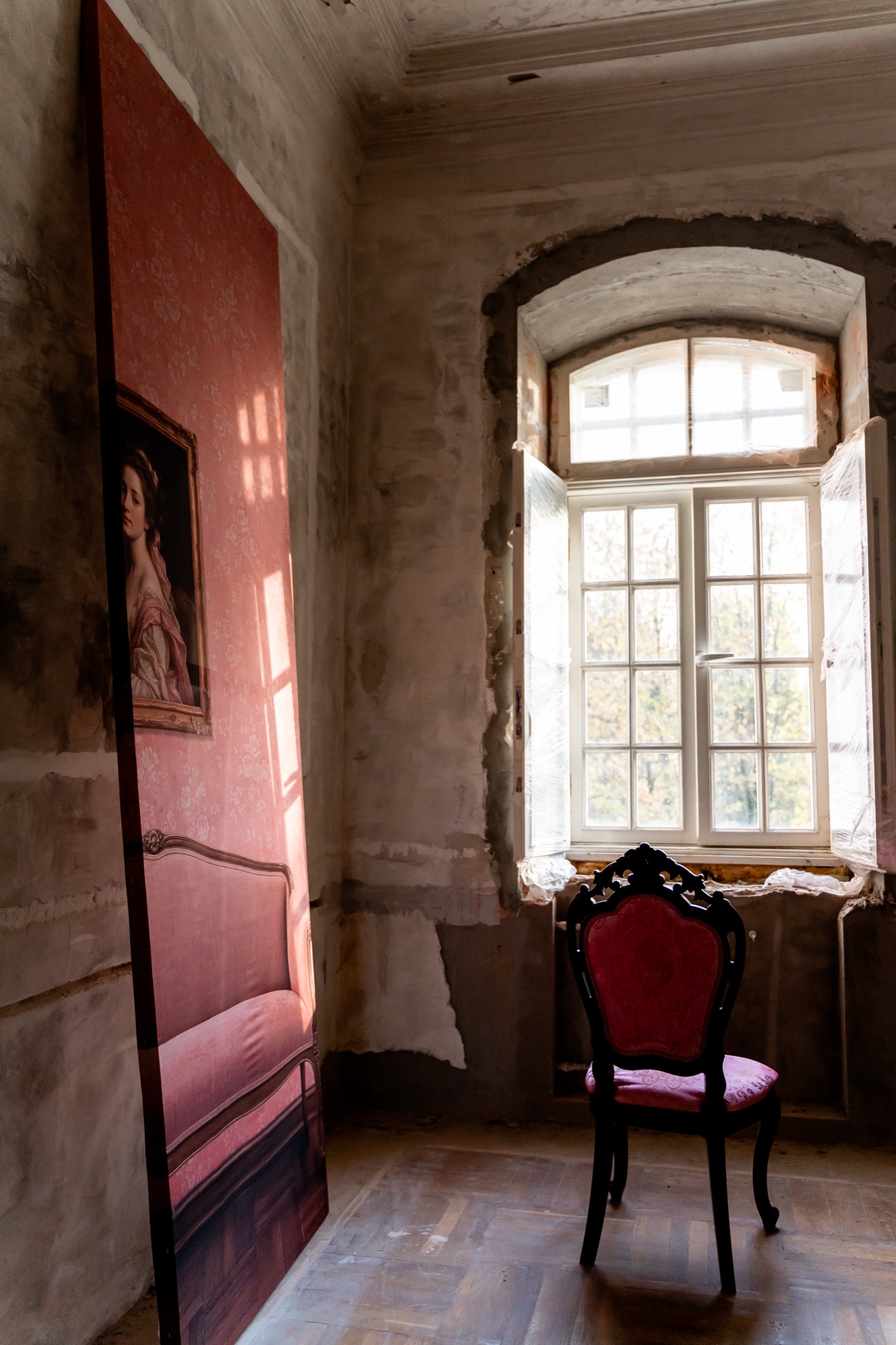
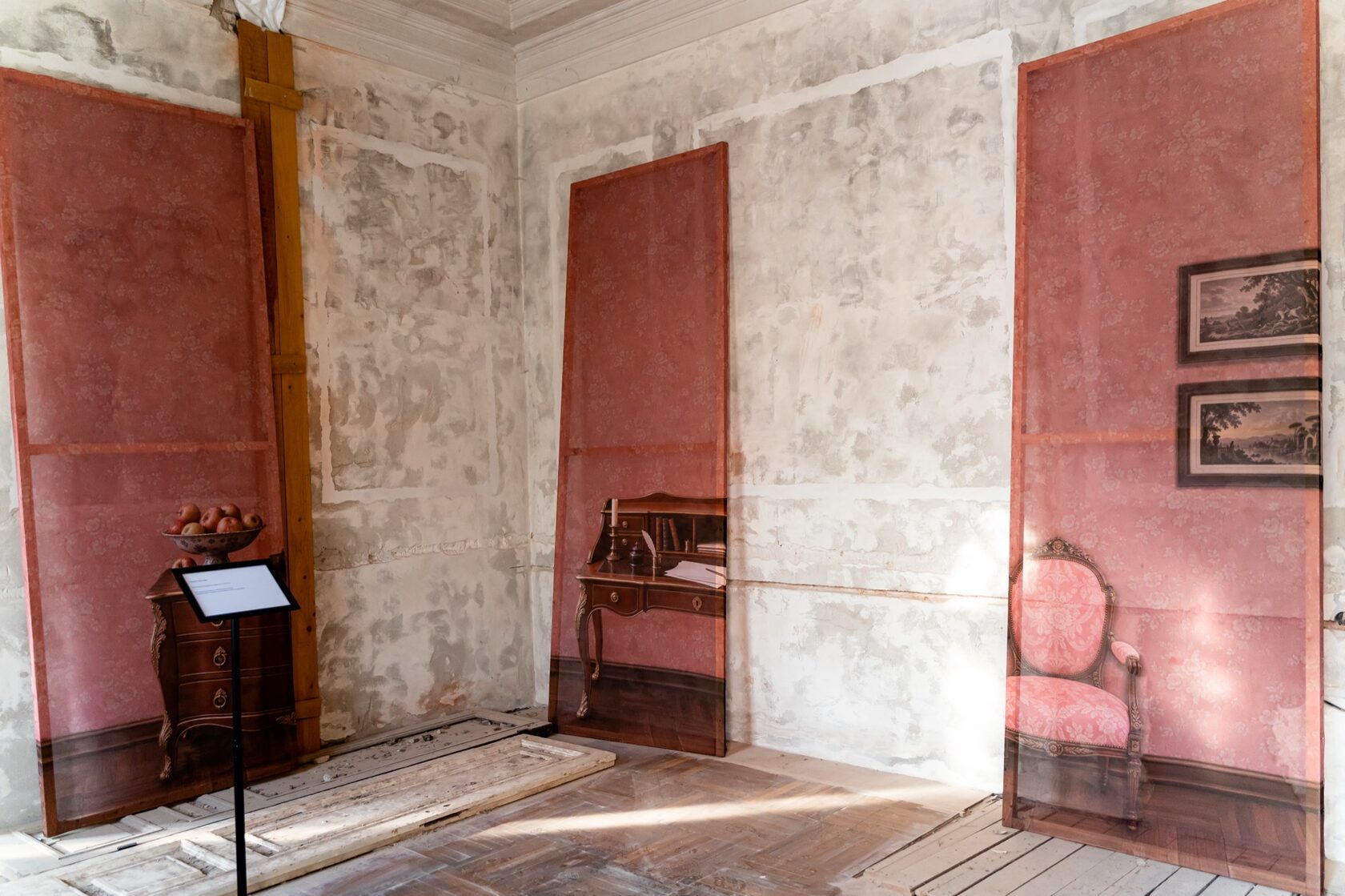
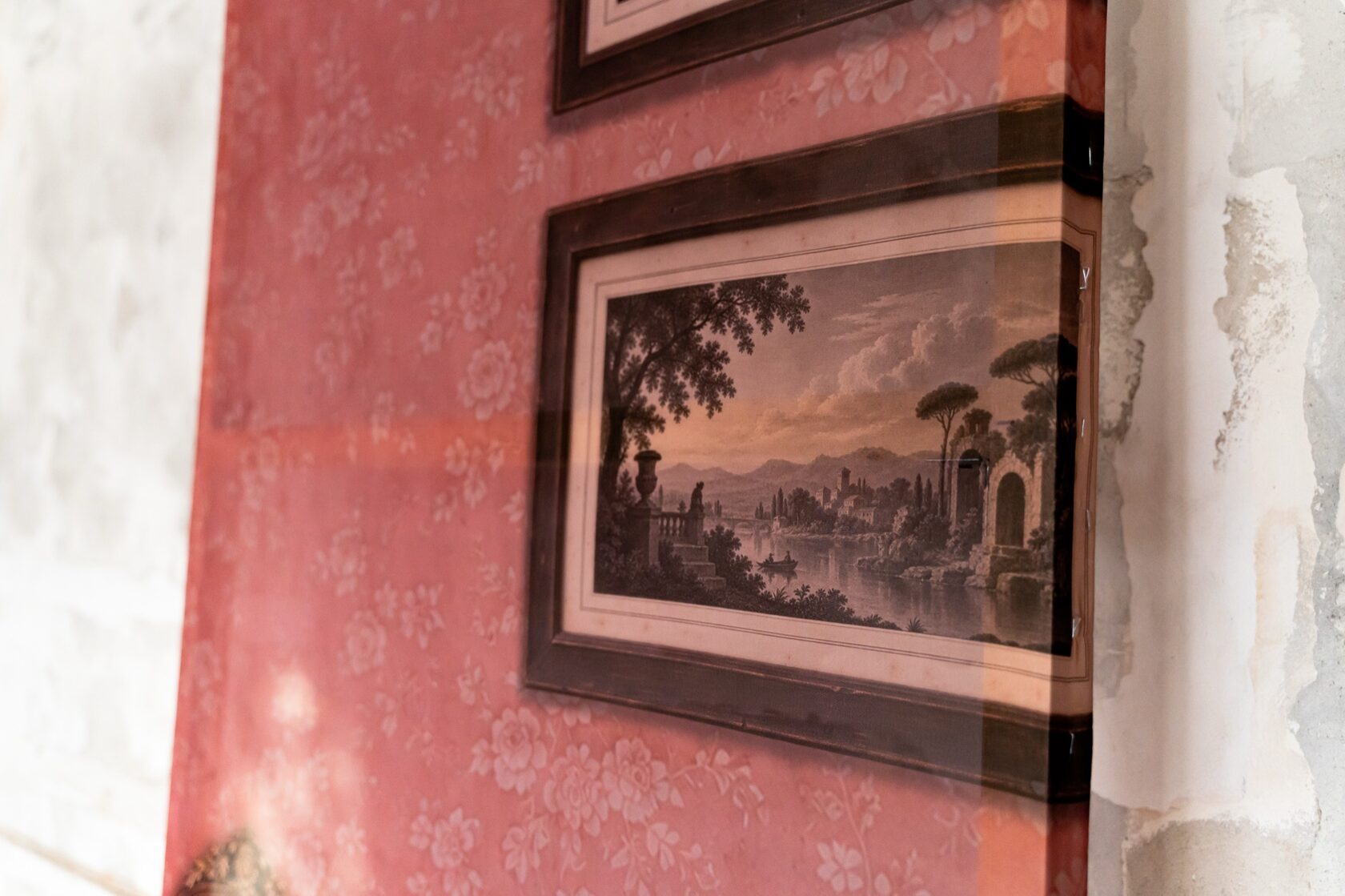
The installation “By Analogy” continues this sequence of interpretations, offering one more version of the estate’s historical appearance — a conjectural interior in a pink range. A colour introduced at one stage of the restoration becomes the ground for the next reconstruction.
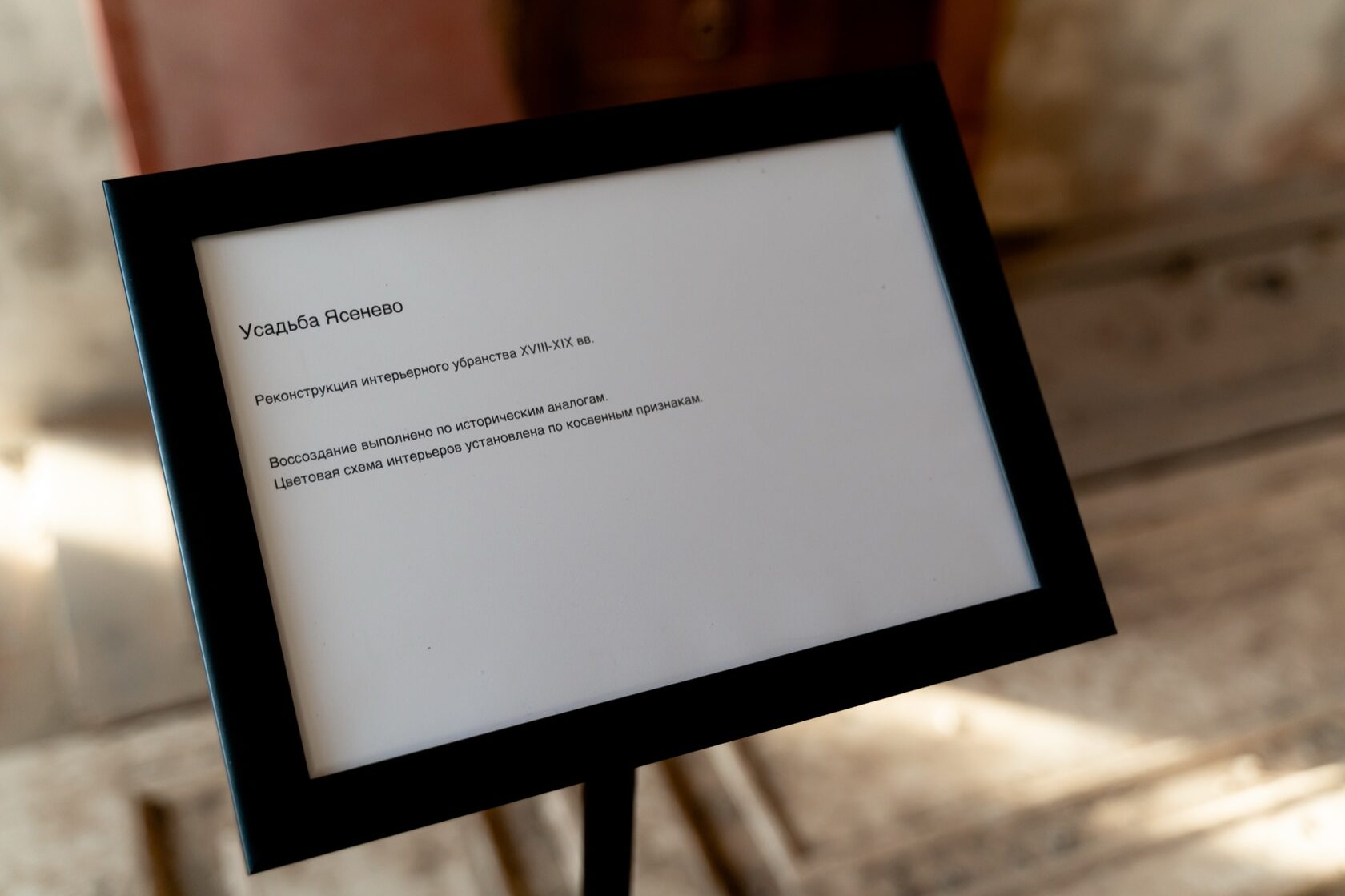
Using the visual language of historical reconstruction and museum modes of display, the installation creates the illusion of a reliable testimony of the past. A fictitious interior is presented as the result of historical reconstruction, blurring the line between historical fact and its interpretation. The museum form, meant to confirm authenticity, becomes an instrument of artistic mystification.